Hi
again everybody.
Since
last time when I talked to you, I have experienced a lot. One thing I have
thought of a lot was when I visited a school in New York. I was watching when
they had class, and then they were talking about Immigration. I thought that
was a very interesting theme, so I want to tell you a little bit about it.
When
people move into another country or a region they are called Immigrants. Immigrants are motivated to leave their countries for
a variety of reasons, including a desire for economic prosperity, political
issues, family re-unification, escaping conflict or natural disaster, or simply
the wish to change one's surroundings.1825
is recognized as the start of Norwegian emigration, when the ship Restauration
set sail to the U.S. with 53 Norwegians aboard.

However,
it was not until 1865, the end of the Civil War, that a large Norwegian
immigration occurred, a mass immigration that lasted for eight years. During
this time period, 110,000 Norwegians entered the United States. A
second and larger wave of mass immigration took place from 1880 to 1893. Prior
to 1880, the majority of immigrants migrated with their families, and in 1880
that changed. Immigrants were younger, educated, and moving without their
family.
During
the Viking Age, almost all Norwegian kings sought their wives from foreign
countries, thus seeking allies in other royal houses. Social and economic
innovation has frequently been connected to immigration: the Hanseatic League
introduced large scale trade in Bergen and Northern Norway. Mining in
Kongsberg, Røros and other places was made possible by immigrants from nearby
countries, and from c. 1500 until the first university was established in
Christiania (Oslo) in 1811, almost all civil servants were immigrants. During
the 19th century the evolution of dairies and the industrial exploitation of
waterfalls depended on immigrants.The
immigrant population in Norway is approximately 759,000 people and the five
largest immigrant groups in Norway are in turn Polish, Swedish, Somali,
Lithuanian and Pakistani.
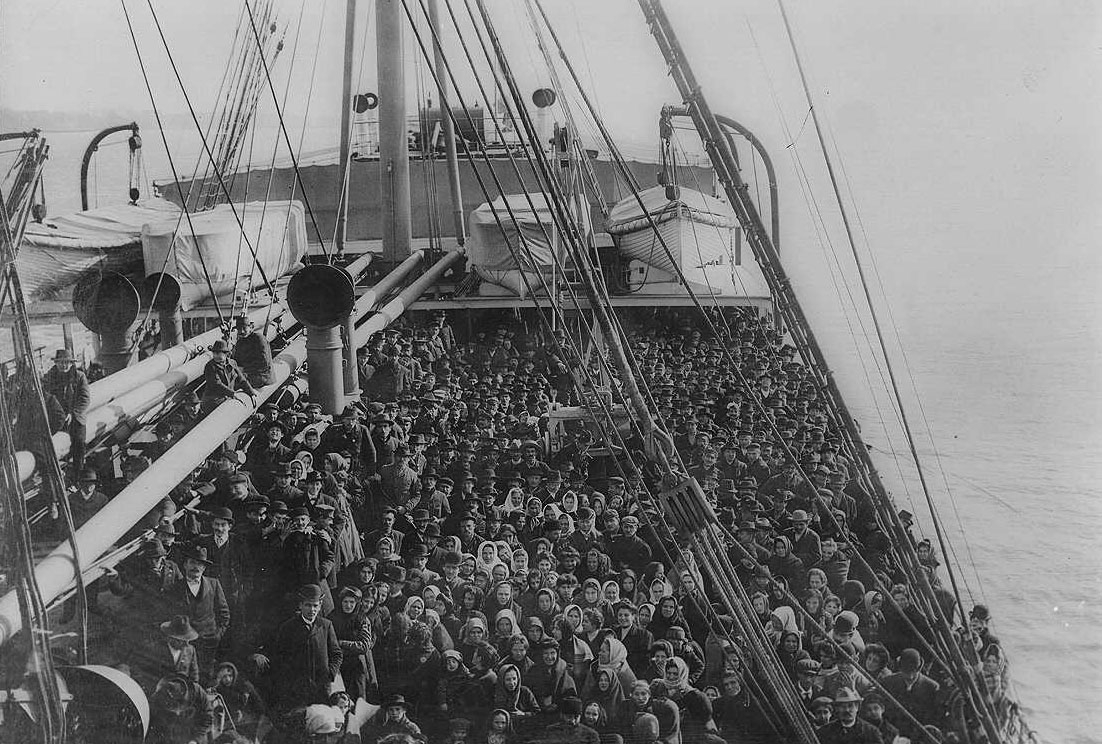
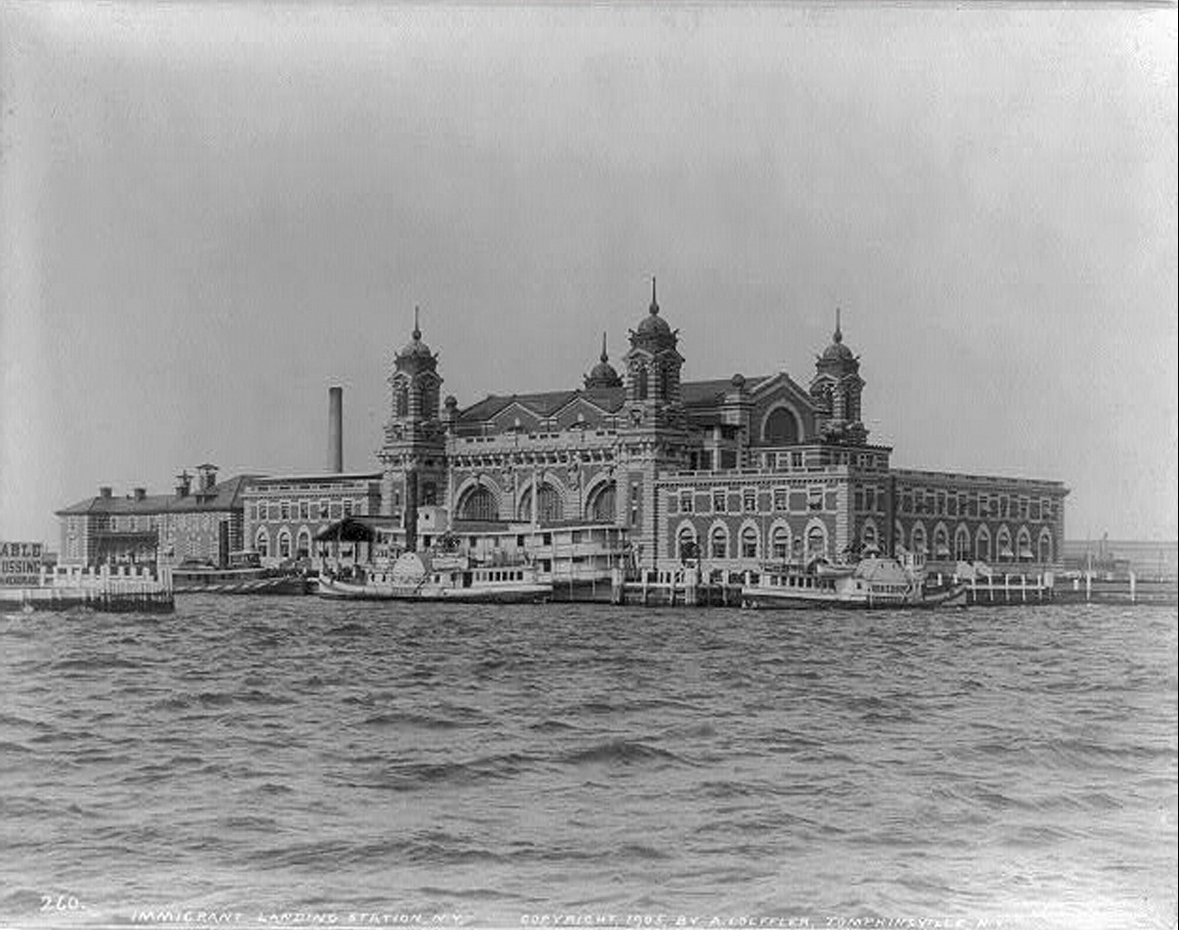
Ellis
Island is in Upper New York Bay and was the gateway for millions of immigrants
to the United States as the nation's busiest immigrant inspection station from
1892 until 1954. The island was greatly expanded with land reclamation between
1892 and 1934. Before that, the much smaller original island was the site of
Fort Gibson and later a naval magazine. The island was made part of the Statue
of Liberty National Monument in 1965, and has hosted a museum of immigration
since 1990.


.jpg)


